

Compatibility matrix
The matrix shows which wire formats each library can write, which the target edition permits, and which each reader supports. The names are illustrative rather than actual Vortex versions or editions:
Format A and Format B have distinct wire IDs and contracts, with Format A introduced first.
Library 1 reads and writes only Format A.
Library 2 reads and writes both formats through one array implementation.
Edition 1 permits only Format A, whereas Edition 2 permits both formats.
Both readers are assumed to support all other components in the file. Unsupported means that the writer has no implementation for that format, whereas Forbidden means that the target edition excludes it. Allowed means both requirements are met, but the writer must still construct an array that the format can represent. Reader results apply only after a successful write.
Writer |
Target edition |
Format |
Write result[1] |
Library 1 reader |
Library 2 reader |
|---|---|---|---|---|---|
Library 1 |
Edition 1 |
Format A |
Allowed |
Reads |
Reads[2] |
Library 1 |
Edition 1 |
Format B |
Unsupported and forbidden |
N/A |
N/A |
Library 1 |
Edition 2[3] |
Format A |
Allowed |
Reads |
Reads[2] |
Library 1 |
Edition 2[3] |
Format B |
Unsupported |
N/A |
N/A |
Library 2 |
Edition 1 |
Format A |
Allowed[4] |
Reads |
Reads[2] |
Library 2 |
Edition 1 |
Format B |
Forbidden |
N/A |
N/A |
Library 2 |
Edition 2 |
Format A |
Allowed[4] |
Reads |
Reads[2] |
Library 2 |
Edition 2 |
Format B |
Allowed[4] |
Reads |
The serializer selects a format from the array’s structure, after which the writer checks whether the target edition permits it. The format column shows that selection, not a separate writer setting. Edition 2 permits both formats, so a writer targeting it can still produce Format A for Library 1 to read.
Compatibility checks
The diagram follows an array from memory to storage and back through the serializer and reader
plugins. It assumes correct implementations, edition checks enabled, and full decoding with
allow_unknown disabled.
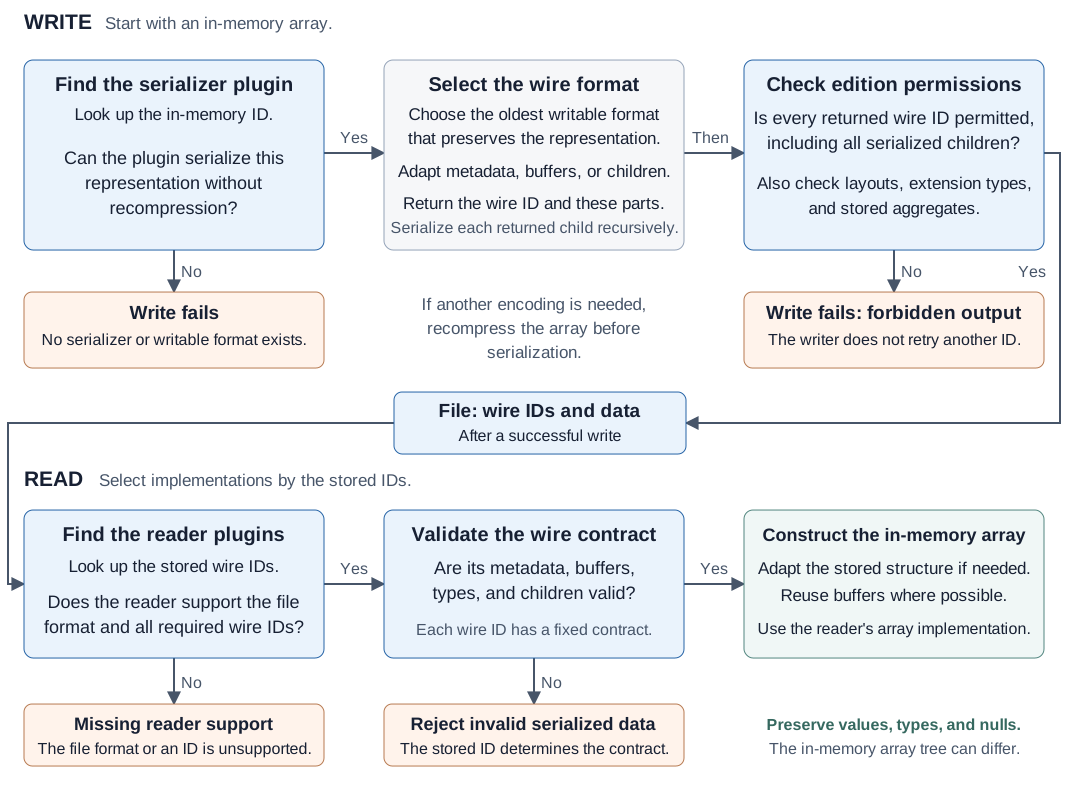
The writer selects a plugin by the array’s in-memory ID, whereas the reader selects a plugin by the stored wire ID. In either direction, the plugin can adapt the array structure while preserving values, data types, and nulls. The diagram groups related checks, although in the implementation component checks occur at several points during writing and reading.
If the serializer returns a forbidden ID, the write fails without retrying a different permitted ID. When the target requires a different encoding, the array must be recompressed before serialization. See Format selection.
The matrix assumes valid serialized data, whereas the diagram also shows the reader rejecting data that violates the stored ID’s contract. Format compatibility does not prevent I/O errors.
The component checks cover arrays and their children, layouts,
extension types, and stored aggregates. The reader needs implementations for the components the file
uses, not every component its edition permits. See Unknown IDs for
missing implementations and the exceptions available with allow_unknown.
For the compatibility guarantee and minimum reader versions, see Versioning. The design explains the invariants behind these outcomes.